-

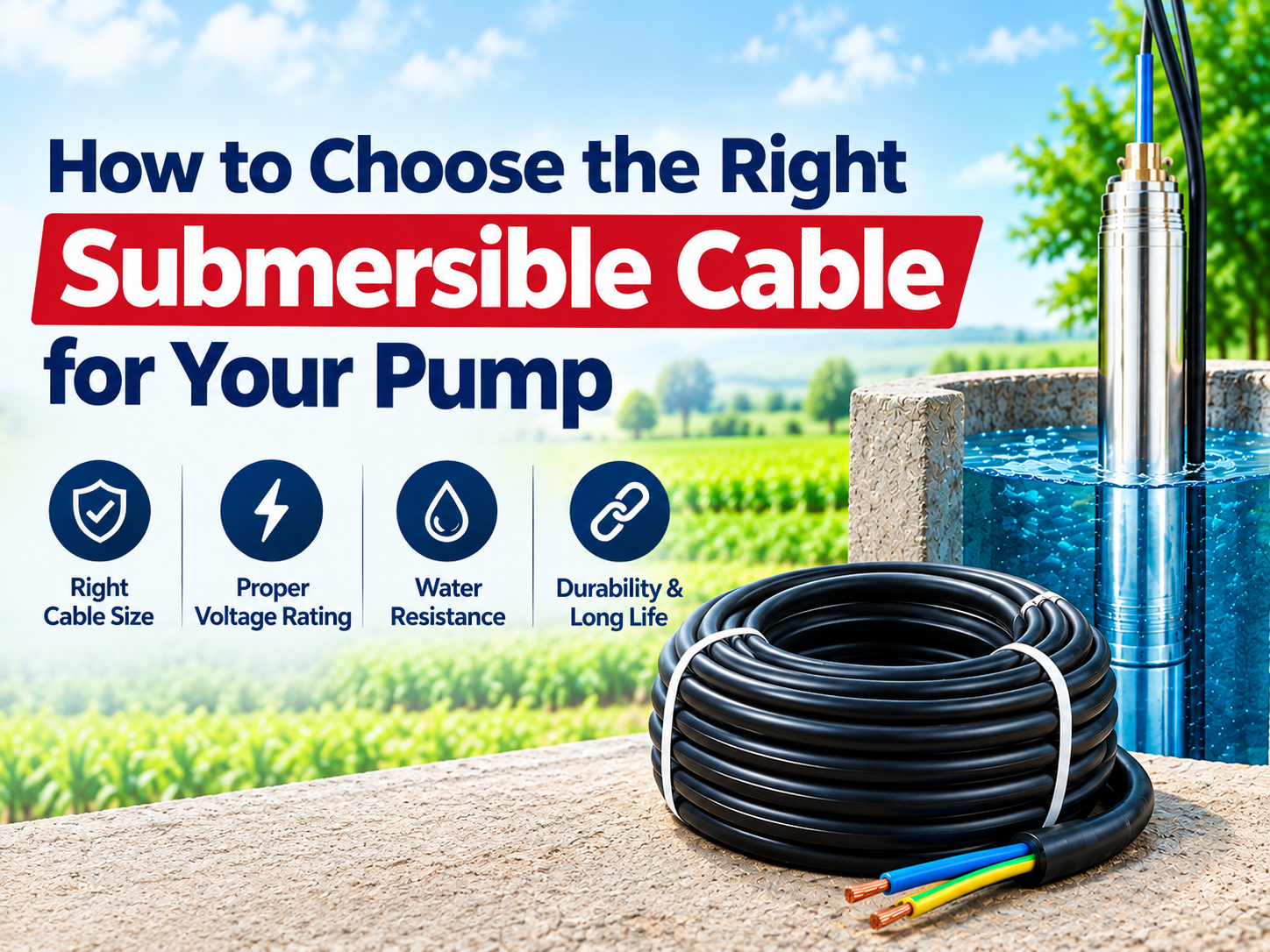
How to Choose the Right Submersible Cable for Your Pump

How to Choose the Right Submersible Cable for Your Pump
Admin

2026-09-22 00:00:00

How to Choose the Right Submersible Cable for Your Pump

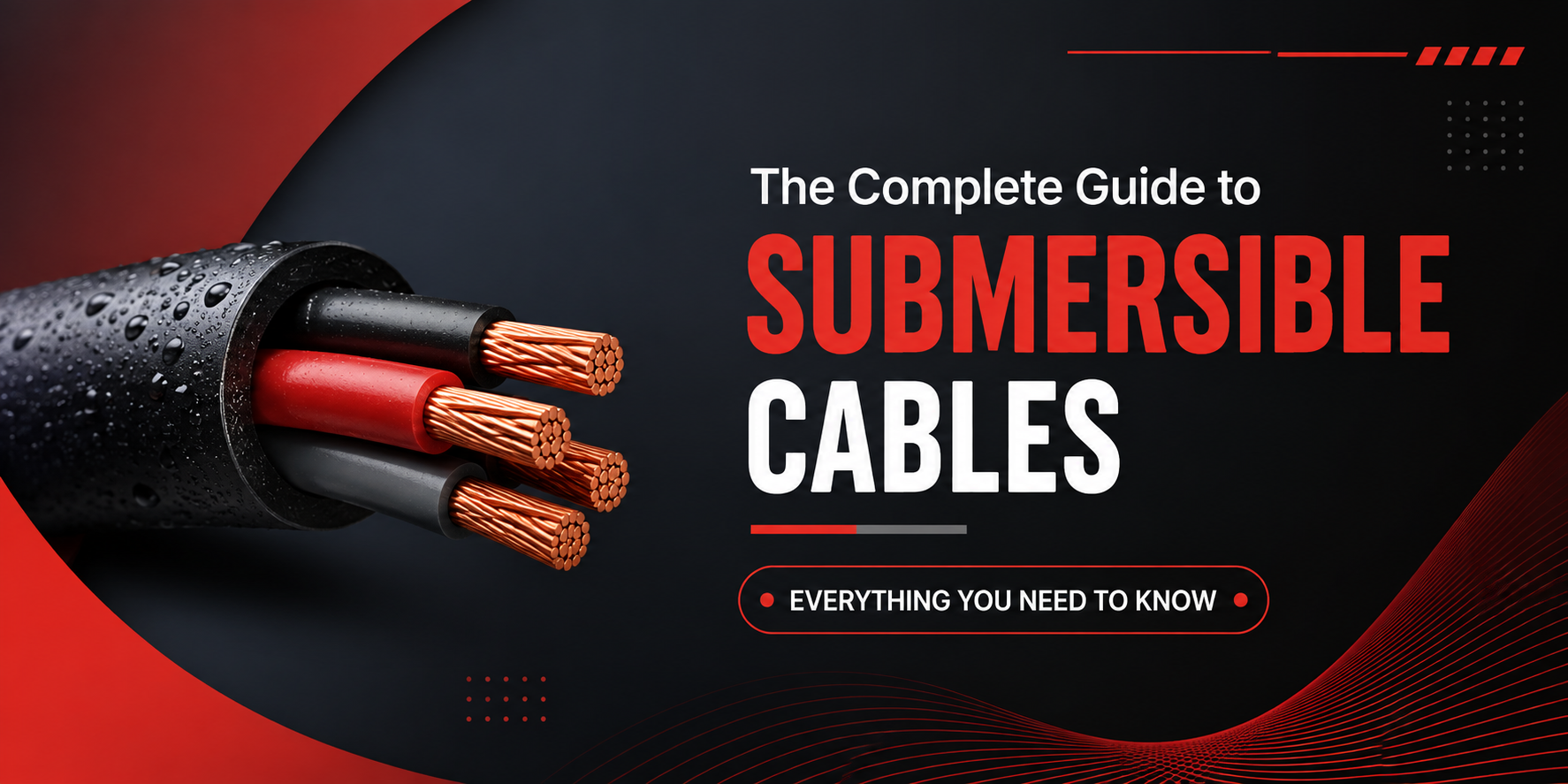
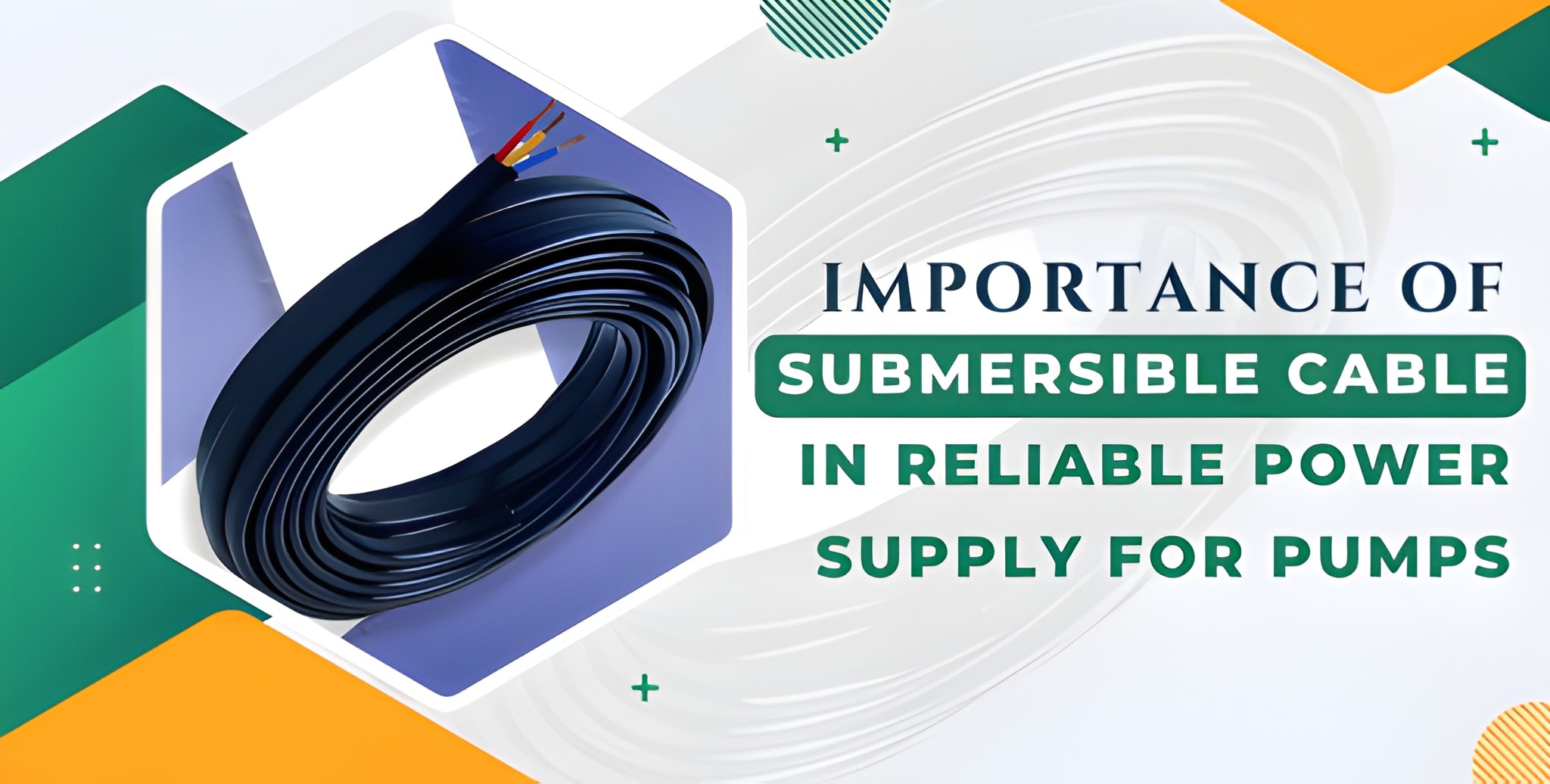
Submersible Cable Selection is not merely the matter of selection based on the match of the submersible cable with the horse power of the pump. It needs to be capable of handling the currents, operate in water, withstand the depths at which it is installed, and perform well electrically.

To the homeowners, farmers, contractors, and industries, here are a few basics that will make their submersible cable selection easier. Neon Cables Pvt Ltd can assist customers in comparing Submersible Cables and Submersible Pump Cables based on pump requirement.

Why Does the Right Submersible Cable Matter?

Submersible pump cables operate in an adverse environment. A major part of the cable can be in water all the time while some other part can pass through the borewell or pipe or even be exposed. The cable thus requires construction and insulation which is capable of performing well in the wet environment continuously.

The cable has to transfer electricity to the motor from the control panel in a way that there is minimum loss of voltage in the process. As per BIS requirements for pump installations, it is required that the conductors selected must be proper for continuous use under water as well as in air and the voltage drop from control panel to the motor terminal must not exceed 3% of the rated voltage. Choosing a wrong cable can create more resistance and heating.

Start With the Pump’s Electrical Details

The first stage is to consider the manufacturer specifications for the pump. Selecting the cable using only the horsepower mentioned on the pump is not advisable.

Items to check:

  • Motor horsepower/rated power
  • Rated voltage
  • Single or three phase power supply
  • Full load current
  • Number of cables needed
  • Depth of installation
  • Total cable length
  • Environmental conditions

It is vital to know the full load current requirement of the motor. Two pumps may have similar horsepower but different current requirement because of voltage and other factors. An electrician/pump technician should confirm the final cable size before installing.

How Does Cable Length Affect Selection?

Cable length is another very ignored aspect. Deeper bore wells would need longer cables. More the length of cable, the effect of electrical resistance becomes relevant, thus causing voltage drop.

Thus a cable that will be appropriate for a shorter installation may not be appropriate for a deeper bore well. The installation technician has to take into account the motor's amperage along with the total length from the power source to the motor.

The BIS requirements for pumps mandate that the sizing of conductors be such that voltage drop is not more than 3% of rated voltage. When selecting a submersible pump cable, tell the seller the actual length of the cable rather than requesting the size based on horsepower.

Flat or Round Submersible Cable: Which Should You Choose?

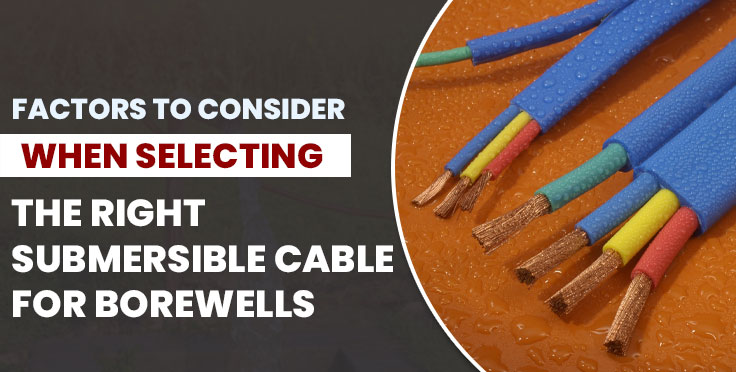
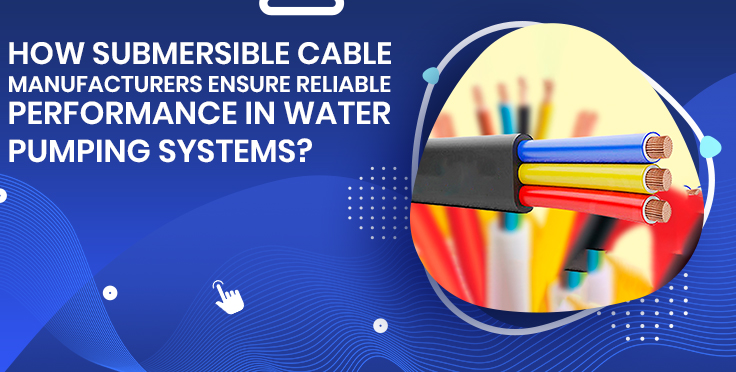
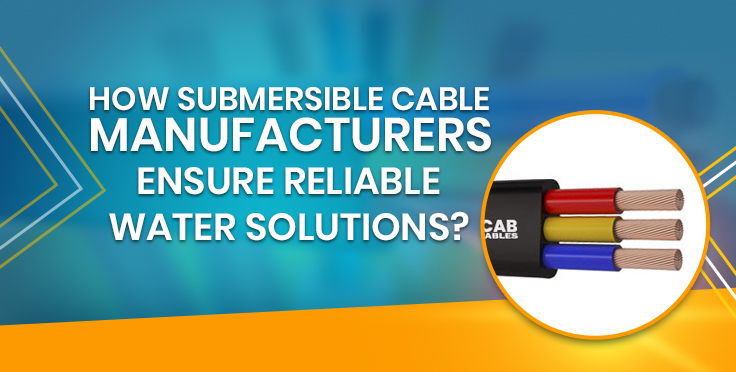
Both flat and round types of cables find use in submerging applications. It all depends on the specific pump being used, the borewell configuration, and space availability. Flat cables are usually used with borewell pumps owing to their design that enables them to sit perfectly side by side with the delivery pipe. Round cables have a round structure and could be chosen in some cases where special configurations or requirements exist. The BIS guidelines for pump installations provide for either round or flat cables that comply with IS 694. 

Check the Cable Standard and Testing

Quality is especially critical when dealing with cables which have to stay in the water. One should ensure that the cables meet all requirements regarding Indian Standard and are marked properly.

IS 694 applies to PVC insulated unsheathed and sheathed cables and cords with rigid and flexible conductors rated voltage 450/750 volts. BIS testing comprises among other things insulation resistance testing, high voltage testing, dimensions, conductor features, and water immersion test for corresponding cables.

Pump documentation from BIS also concerns IS 694 cables and involves appropriate construction and size of conductors for continuous use both in water and air. Instead of deciding upon quality of a cable based on price, one should inquire into its standard, construction, conductor materials, insulation and test reports.

Why Is Insulation Quality Important?

Electricity flows through the conductor, whereas the insulation ensures that the electric power is isolated from the surroundings and the other conductors. For a submersible installation, the insulation needs to withstand the effects of water exposure and installation conditions. Any damage may result in leakage, short circuits, risks associated with electricity, and even pump failure.

Select a cable that suits the purpose of submersion or immersion. Avoid using the regular house wire just because it is less expensive compared to the one needed. Flexible House Wire that you get from the top House Wire Manufacturers is meant for the appropriate building and appliance wiring purposes. The proper submersible cable ought to be chosen based on the requirements of the pump manufacturer and the standard.

Consider the Number of Cores

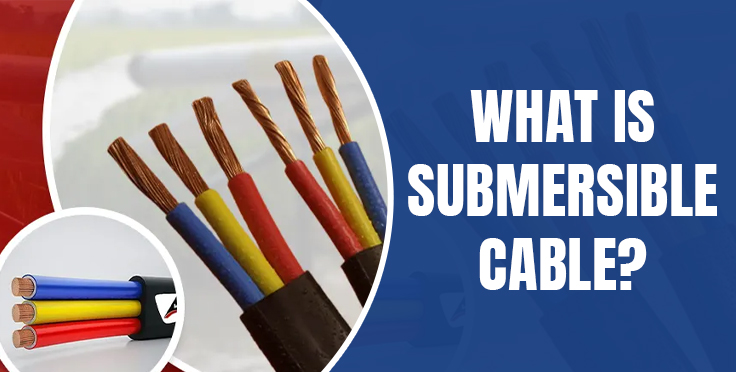
The number of cores varies from motor to motor and from electrical circuit to circuit. Sometimes a three-core cable may be used with some arrangement of pumps, whereas a four-core arrangement gives extra core for earthing in the case where earthing is required.

As per the BIS pump requirements, in the case of a four-core cable being used, the fourth core should be utilized for earthing. It is not wise to take lightly any modification made by increasing or decreasing the core of cables.

Do Not Ignore the Cable Joint

The junction of the pump cable and longer cable is another very important element. Even if you have a good quality cable, your whole system might become untrustworthy due to improper junction.

It is necessary to insulate the connection and make it waterproof according to a certain way that suits the pump and the cable. According to the BIS requirement, where it is required to join the cable from the motor with the user cable, then a proper procedure for making a water tight joint must be provided by the motor manufacturer.

Think About Mechanical Protection

An electrical cable in the borewell may come into contact with the pipe, the casing, the fittings, or any other surface when installing or operating the borewell. The cable needs to be placed in a proper manner as per the manufacturer's recommendations. Sharp bending, pulling, crushing, and handling may result in insulation failure prior to its operation. It is possible that an electrical cable of the appropriate rating fails prematurely due to physical damage.

What Should You Tell a Cable Supplier?

In case you are in contact with Neon Cables Pvt Ltd, please share all the relevant information and not just mention "pump cable".

Details to be shared include:

  • Pump Horse Power
  • Voltage Rating
  • Single phase or three phase details
  • Motor Current
  • Bore well/Pump depth
  • Cable Length requirement
  • Number of Cores
  • Whether Flat/Round Cable is required
  • Conditions for water and installation
  • Suggestion by Pump Manufacturer for cable

This will help the supplier make recommendations for a suitable Submersible Cable.

Simple Buying Checklist

Requirement

What to verify

Pump rating

HP, voltage and current

Cable length

Complete run from supply to motor

Conductor

Correct material and cross-section

Construction

Flat or round as required

Insulation

Suitable for continuous wet use

Standard

Applicable IS requirement

Cores

Match the pump wiring system

Voltage drop

Within the recommended limit

Joint

Proper watertight method

Documentation

Marking, specifications and test information

Why Consider Neon Cables Pvt Ltd?

Neon Cables Pvt Ltd is another good choice for cable comparison between pumps and electricity cables. It is important for buyers to consult on pump rating, cable length, installation depth, and construction.

Final Thoughts

Selection of an appropriate submersible cable goes beyond finding a cable that matches the pump horsepower. It is necessary to take into consideration motor current, voltage, length of cable, installation depth, conductor size, number of cores, insulation, environmental factors, relevant standards, and voltage drop.

The best Submersible Pump Cable gets you the top of the line proper delivery of power and straight to the motor and ensures reliable and safe operation. One needs to obtain all the details regarding the pump's electrical specifications prior to purchase.

Frequently Asked Questions

Is it possible to choose a submersible cable based on HP of the pump alone?

No, since there are several parameters like voltage, current, length of the cable, depth, number of cores, and voltage drop that are involved.

Are flat cables appropriate for borewell pumps?

While flat design is common for borewell cables, you must always follow the recommendation of the manufacturer of the pump and the space available.

Why is voltage drop important?

Voltage drop could impact the voltage delivered to the motor and may be the reason behind poor performance and heating.

What will happen if the cable for submersible is smaller than the pump?

If the submersible cable has smaller conductors, it may result in higher resistance and high voltage drop. It would be able to provide less power to the motor and lead to excess heating during its work.

How do I know what submersible cable is suitable for my borewell depth?

The depth of your borewell alone will not give you a proper indication regarding what cable you need.

Recent posts :----

What is Submersible Cable?

2025-09-22 00:00:00

Contact Us :-----

Get In Touch With Us

Mobile:

+91 7405075773

Address:

Plot No.11, Survey No.22, Yamuna Industrial Area, Vavdi, Gondal Road Highway, Rajkot 360004, Gujarat, India